Professional mold remediation for Gettysburg and Adams County, PA. This site documents the IICRC S520 remediation process, real 2026 cost data, EPA-based moisture control, and what Gettysburg's fieldstone foundations, 44 inches of annual rain and Civil War-era housing stock actually mean for mold in your home.
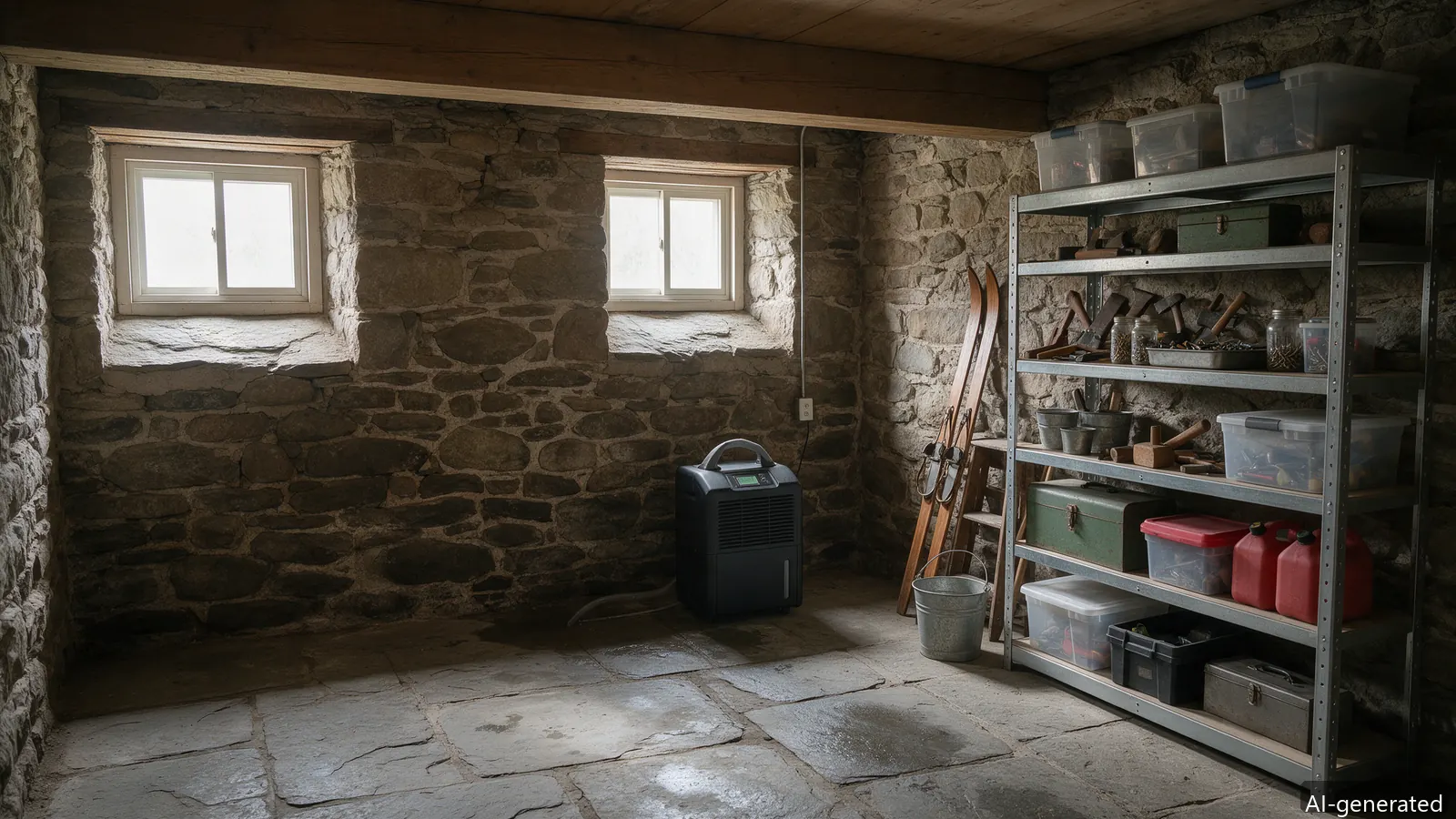
Gettysburg averages 44.46 inches of rain per year (NOAA 1991–2020 normals, Eisenhower NHS station), with June the wettest month at 4.7 inches. The housing stock runs from 1780s fieldstone to student rentals near the college, and Adams County's 78.9% owner-occupancy (Census ACS 2020-2024) means most of these basements are lived in, not just storage.
The geology adds its share: red shale, siltstone and sandstone of the Gettysburg Formation, overlain by Jurassic diabase intrusions (USGS). Weathered shale holds perched water; diabase weathers to clay-rich regolith that stores moisture. Wet foundations meet organic finishes — plaster, drywall, framing, stored goods — and mold follows.
| Moisture driver in Adams County | What it does inside a house | Typical outcome |
|---|---|---|
| 44 in of annual rain, June wettest (NOAA 1991–2020) | Saturated ground presses water against foundations for days after storms | Seepage through stone and block walls; damp cellars |
| Gettysburg Formation: red shale, siltstone, sandstone (USGS) | Weathered shale holds perched water; carbonate cements dissolve and open flow paths | Wet foundation walls, year-round damp zones |
| Diabase sills and dikes weathering to clay-rich regolith (USGS) | Clay stores moisture and drains slowly; groundwater tables stay high | Persistent humidity in basements cut into diabase |
| Housing stock from the 1780s onward; plaster and fieldstone | Organic finishes on damp masonry feed colonies behind finishes | Hidden growth revealed during renovations or sales |
The process follows the ANSI/IICRC S520-2024 Standard for Professional Mold Remediation — the published standard Pennsylvania contractors reference because the state licenses no mold trade. Four moves, in order: find and fix the moisture source; contain the work area; remove contaminated porous materials; verify the structure dried back to normal.
Every community around Gettysburg has its own housing stock and moisture profile:
Most Gettysburg jobs run between $1,223 and $3,757, with a national average near $2,368 (Angi / HomeAdvisor 2026 cost data). Small bathroom jobs land at $500–$1,000; whole-house projects after a flood reach $10,000–$30,000. Work is typically priced at $10–$25 per square foot of affected area. A written quote after an on-site visit is the only reliable number.
Often yes when the mold follows a sudden, covered event like a burst pipe, with coverage limits and exclusions that vary by policy. Long-term humidity, seepage or deferred maintenance is usually excluded. Get a documented moisture source, photos and a written scope before filing.
EPA guidance: dry water-damaged materials within 24–48 hours and in most cases mold will not grow. Once established, colonies keep producing spores until the moisture source is fixed — cleanup without fixing the water means the problem returns.
The IICRC S520-2024 standard does not rank risk by color or species. Response is driven by quantity and location of growth, not by color. Any substantial indoor growth warrants professional evaluation; "black mold" is a moisture indicator like any other colony.
When you need documentation: real-estate transactions, medical concerns, insurance claims, or to locate hidden growth. If you can see or smell mold, testing the visible colony adds little — the money goes to fixing moisture and removing growth.
National ranges: visual inspection $250–$350; sampling with lab analysis $303–$1,075, averaging $689 (HomeAdvisor 2026). Each air or surface sample adds a lab fee. Written reports matter for insurance and real estate.