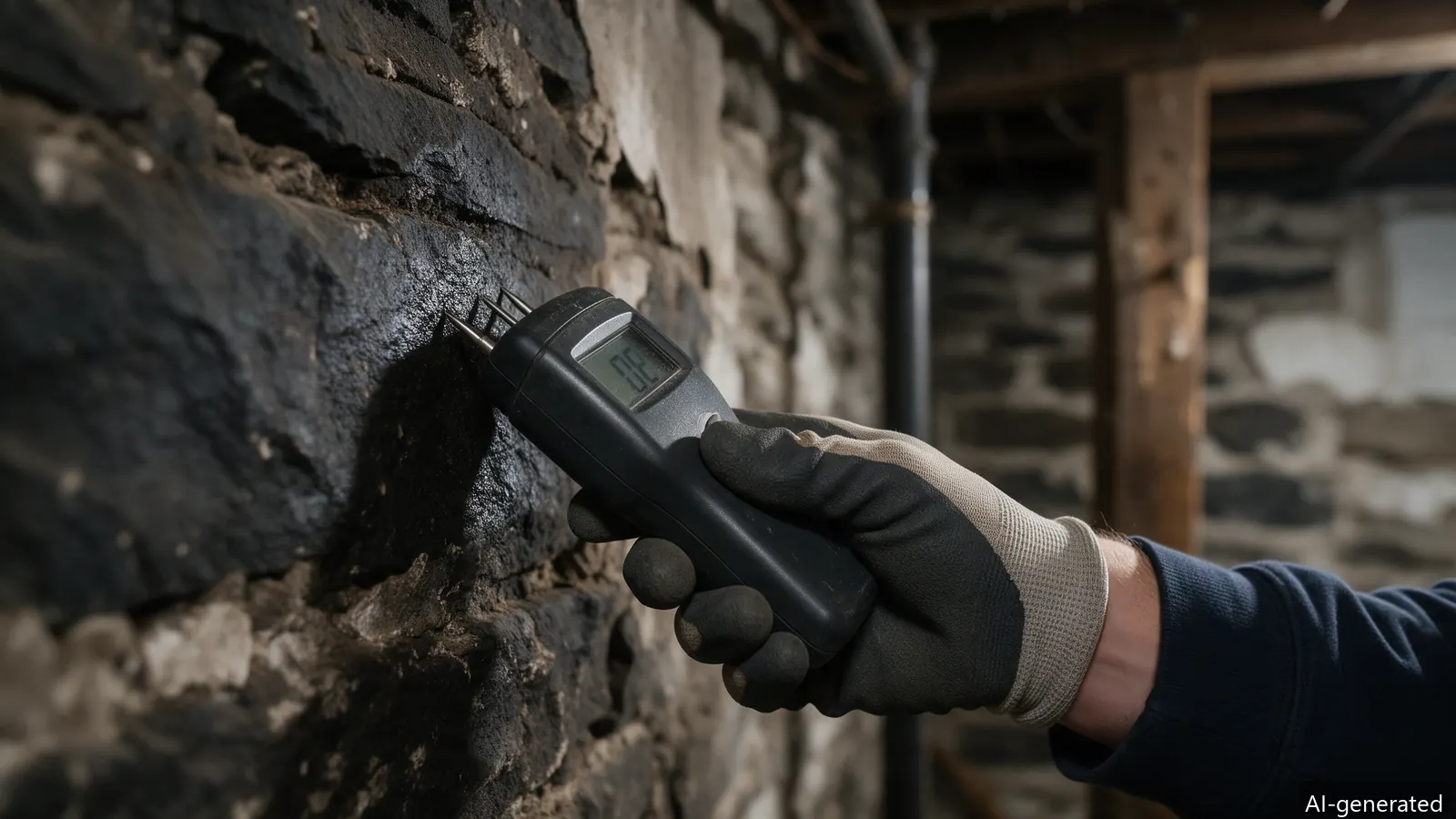
Inspection decides everything: it finds the water, maps the growth, and tells you whether you need remediation — or a $10 hygrometer and a gutter extension. Here is what a professional assessment covers and what it costs.
EPA's hidden-mold guidance reads like a Gettysburg basement checklist: the back side of drywall and wallpaper, the tops of ceiling tiles, underside of carpets, areas inside walls around condensing pipes, and roof materials above ceiling tiles. Fieldstone foundations and plaster finishes hide growth until renovations or sales expose it — which is why pre-purchase inspections in the Historic District routinely find colonies no walkthrough spotted.
| Situation | Testing? | Why |
|---|---|---|
| You can see or smell mold | Usually no | The colony is identified; spend on fixing moisture and removing growth |
| Buying or selling a home | Yes | Documentation for negotiations; pre-purchase peace of mind |
| Insurance claim | Yes | Lab-identified samples and written scope support the file |
| Health symptoms with no visible mold | Yes | Air sampling locates hidden sources; consult a physician separately |
| After remediation | Case by case | Post-remediation verification: visual + moisture, sampling when agreed in writing |
What happens after the inspection calls for remediation.
Next step: the remediation process →The full 2026 price picture, testing included.
Inspection & remediation costs →When you need documentation: real-estate transactions, medical concerns, insurance claims, or to locate hidden growth. If you can see or smell mold, testing the visible colony adds little — the money goes to fixing moisture and removing growth.
National ranges: visual inspection $250–$350; sampling with lab analysis $303–$1,075, averaging $689 (HomeAdvisor 2026). Each air or surface sample adds a lab fee. Written reports matter for insurance and real estate.
No. Fieldstone foundations wick moisture, but colonies only establish on wet organic surfaces. Controlled ventilation, dehumidification (target 30–50% RH per EPA) and grading that drains away from the house prevent most basement growth.
Hardware-store kits exist but rarely answer the real question: how much, where, and is it growing. Professional assessment combines moisture mapping, thermal imaging and, where useful, lab-identified samples.
A post-remediation verification (PRV) under IICRC S520-2024: visual inspection, moisture confirmation, and — when agreed in writing — independent sampling to confirm the structure is back to Condition 1 or a documented Condition 2.