What actually happens when a certified crew remediates a Gettysburg home — step by step, under the ANSI/IICRC S520-2024 standard, the procedural standard Pennsylvania contractors follow because the state licenses no mold trade.
Every job starts with moisture mapping: where is the water coming from, what did it wet, and how far did growth spread. Thermal imaging finds cold spots; moisture meters quantify; borescopes peek into wall cavities. The S520 preliminary determination classifies the contamination:
| Condition (IICRC S520-2024) | Definition | Response |
|---|---|---|
| Condition 1 — normal fungal ecology | Settled spores or traces consistent with a normal indoor environment | No action; document and monitor |
| Condition 2 — settled spores | Spores dispersed from a Condition 3 area; possible traces of growth | Cleaning and HEPA vacuuming under containment precautions |
| Condition 3 — actual growth | Visible or hidden mold colonies, active or dormant | Full remediation: containment, removal, cleaning, PRV |
The 2024 edition made one thing explicit: the size of visible growth no longer drives the response — condition and location do. A small patch of active growth inside a wall cavity can demand more containment than a larger, dry, non-porous surface colony.
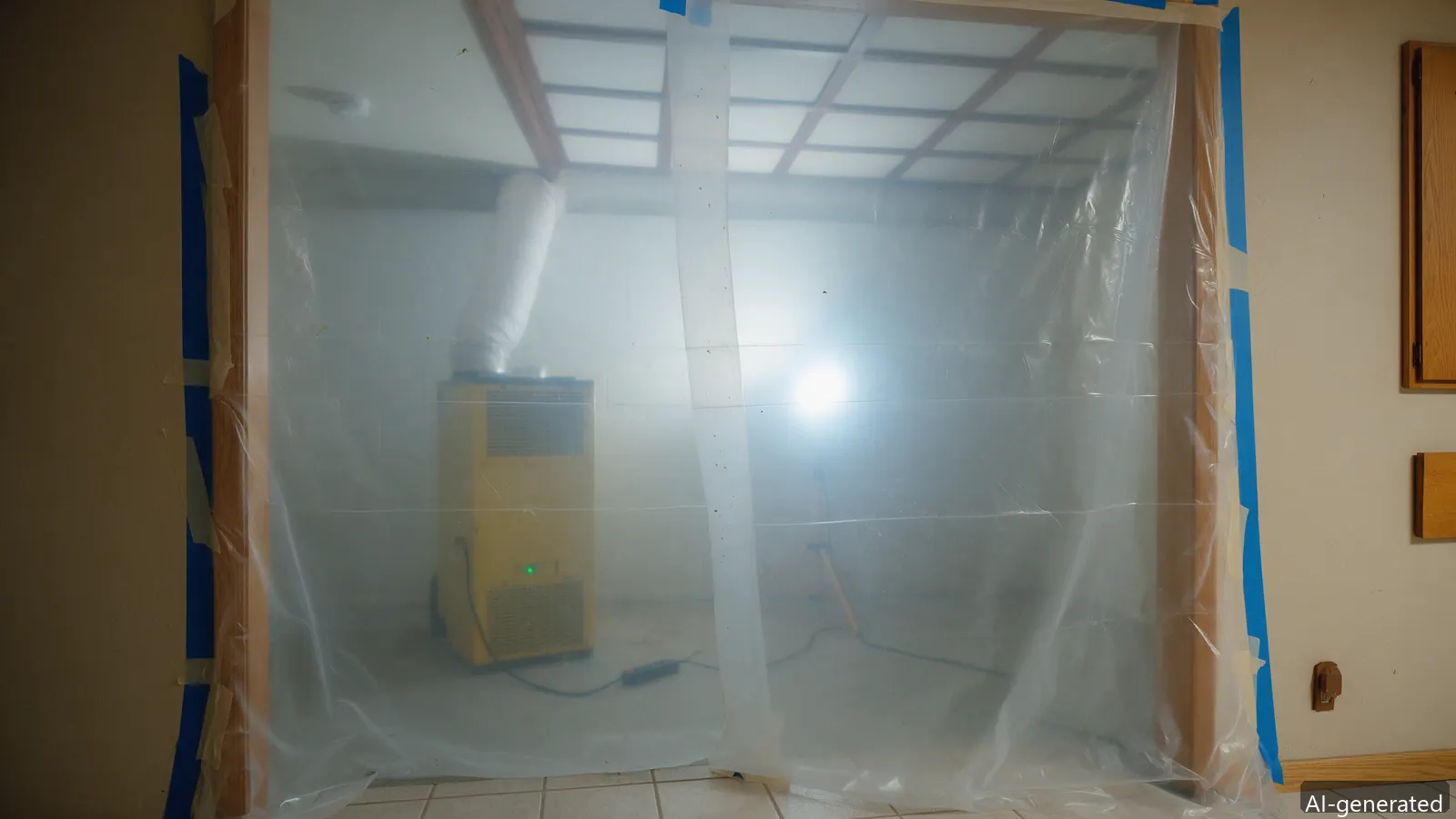
Containment prevents cross-contamination: 6-mil polyethylene sheeting, taped seams, and — above small source containment — negative air machines (HEPA-filtered negative pressure) so air flows into, not out of, the work zone. Historic Gettysburg homes add a wrinkle: plaster walls mean demo containment must protect finishes worth keeping.
Porous materials with actual growth (drywall, insulation, carpet pad) are removed and bagged inside containment. Semi-porous and non-porous surfaces (framing, masonry, subfloor) are HEPA-vacuumed, damp-wiped and, where paint or stain holds growth, sanded or media-blasted. The 2024 S520 discourages spraying biocides on growth instead of removing it — dead mold still triggers reactions; removal is the standard.
Removing growth without fixing water guarantees a callback. Structural drying runs air movers and dehumidifiers until meters prove framing and subfloor hit dry-standard moisture content. In Gettysburg that usually means correcting the cause: re-grading, gutter extensions, dehumidifier sizing, or a sump and battery-backup conversation.
A post-remediation evaluation (PRE) by the remediator — or an independent PRV by an Indoor Environmental Professional when required — confirms no visible growth, normal moisture, and clean containment surfaces. The 2024 edition tightened how remediator-PRE vs independent-PRV decisions are documented for all Materially Interested Parties.
Where testing earns its cost, where it doesn't, and the $250–$1,075 price math.
When is testing part of this? →National 2026 data applied to Adams County job sizes, room by room.
What remediation costs in Gettysburg →Most Gettysburg jobs run between $1,223 and $3,757, with a national average near $2,368 (Angi / HomeAdvisor 2026 cost data). Small bathroom jobs land at $500–$1,000; whole-house projects after a flood reach $10,000–$30,000. Work is typically priced at $10–$25 per square foot of affected area. A written quote after an on-site visit is the only reliable number.
Often yes when the mold follows a sudden, covered event like a burst pipe, with coverage limits and exclusions that vary by policy. Long-term humidity, seepage or deferred maintenance is usually excluded. Get a documented moisture source, photos and a written scope before filing.
EPA guidance: dry water-damaged materials within 24–48 hours and in most cases mold will not grow. Once established, colonies keep producing spores until the moisture source is fixed — cleanup without fixing the water means the problem returns.
Hardware-store kits exist but rarely answer the real question: how much, where, and is it growing. Professional assessment combines moisture mapping, thermal imaging and, where useful, lab-identified samples.
A post-remediation verification (PRV) under IICRC S520-2024: visual inspection, moisture confirmation, and — when agreed in writing — independent sampling to confirm the structure is back to Condition 1 or a documented Condition 2.